






0

0
0
0
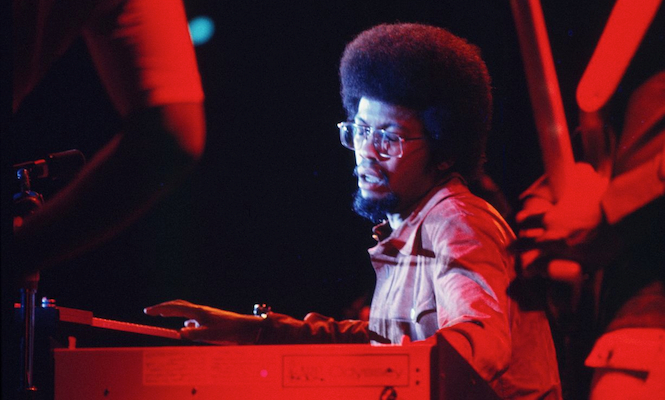
Herbie Hancock, a titan of jazz, has been a transformative force in the integration of electronic instruments and innovative production techniques across various music genres. His fearless experimentation has continually pushed the boundaries of how electronic music and jazz intersect, leaving an indelible mark on both genres.
Hancock's journey into electronic music began in the late 1960s, influenced by Miles Davis's avant-garde album, Bitches Brew. He was one of the first jazz musicians to embrace synthesizers, integrating them into his compositions during a time when their use was largely uncharted in jazz. This period saw Hancock utilizing instruments like the ARP Odyssey and Oberheim 8-voice, especially noted on his seminal album Head Hunters in 1973, which cleverly fused jazz with funk, ushering in a new era of jazz-funk fusion powered by electronic sounds source.

The 1980s marked a significant evolution in Hancock's career with his collaboration with producer and bassist Bill Laswell. Albums like Future Shock (1983) and Sound-System (1984) were heavily influenced by electronic elements, featuring advanced techniques such as sampling, digital editing, and turntable scratching. Future Shock is particularly renowned for its track "Rockit," which not only utilized early hip-hop production techniques but also featured a groundbreaking music video that became a cultural phenomenon, winning multiple MTV Video Awards source.
Even beyond the peak periods of his earlier revolutionary works, Hancock has remained at the forefront of technological adoption in music. His live performances often incorporate modern music software, laptop production rigs, and iPad controllers. Hancock has also shown interest in the integration of artificial intelligence into music creation, continuously exploring how technology can enhance musical expression source.

Herbie Hancock's willingness to embrace and experiment with new sounds and technologies has not only kept his music relevant but also deeply influential across multiple musical genres. From jazz to funk, and hip-hop, his works have paved the way for countless artists. Tracks like "Rockit," "Chameleon," and "I Thought It Was You" remain pivotal, showcasing his unique ability to blend sophisticated jazz elements with the pulsating rhythms of electronic music. His approach has inspired generations of musicians to explore and innovate beyond traditional musical boundaries .
Herbie Hancock's journey through the landscapes of music and technology illustrates a fearless innovator who has continually pushed the limits of what music can represent. His contributions to the electronic music scene, particularly within jazz, underscore his pivotal role in the evolution of music as we know it today.